Against the backdrop of manufacturing’s relentless pursuit of high efficiency, precision and intelligence, full-hydraulic electro-hydraulic hammers and CNC machine tools stand as core processing equipment. Their integrated deployment has become a vital method to boost production efficiency and product quality. Several mainstream integrated application schemes are elaborated as follows.
Sequential Integration Scheme
Sequential integration is the most basic configuration. Under this scheme, the full-hydraulic electro-hydraulic hammer and CNC machine tool operate in sequence following preset technological procedures.
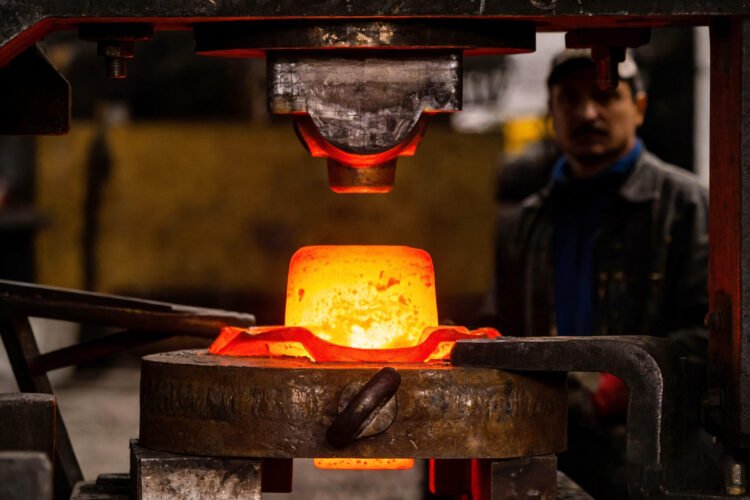
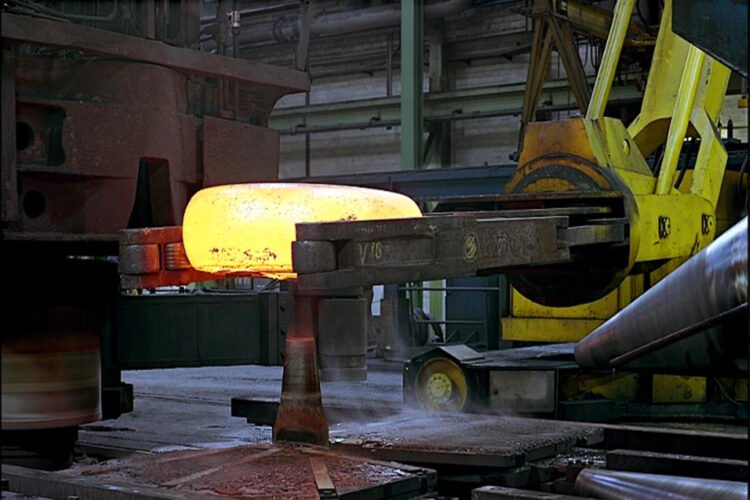
For instance, when forging complex metal components, the blank is first rough-forged by the full-hydraulic electro-hydraulic hammer. Its powerful impact reshapes the metal and optimizes its internal metallurgical structure to form a near-net shape. After forging, the workpiece is transferred to the CNC machine tool, which executes high-precision cutting, drilling, milling and other finishing processes to deliver finished parts meeting design specifications.
This scheme features clear process flows and straightforward equipment operation, making it suitable for mass production of parts with fixed processes. Nevertheless, it has drawbacks: sequential production requires intermediate workpiece handling, which extends production cycles and raises labor costs.
Parallel Integration Scheme
Parallel integration arranges full-hydraulic electro-hydraulic hammers and CNC machine tools side by side to perform separate processes simultaneously on different workpieces.
When machining large mechanical components, some blanks undergo forging on the electro-hydraulic hammer, while pre-forged workpieces are processed on the CNC machine tools. Once a CNC machine finishes one workpiece, a newly forged part can be immediately conveyed to it for machining, and the hammer can keep forging fresh blanks nonstop.
This model maximizes equipment utilization and minimizes idle time, greatly lifting overall throughput. However, it imposes strict requirements on plant layout and material handling. Reasonable layout planning and optimized workpiece conveying routes are mandatory to guarantee smooth production.
Composite Integration Scheme
Composite integration organically combines partial functions of full-hydraulic electro-hydraulic hammers and CNC machine tools into a single multi-functional composite machine.
Certain high-end CNC forging machine tools integrate full-hydraulic electro-hydraulic hammer forging functions. A single machine can complete both forging and subsequent cutting without transferring workpieces between separate stations.
This scheme streamlines production steps and improves efficiency. More importantly, it eliminates precision deviation caused by repeated workpiece transportation and guarantees consistent machining accuracy. On the downside, composite integration involves high technical barriers, heavy R&D and manufacturing costs, and demands highly skilled operators.
There exists a wide range of integration solutions for full-hydraulic electro-hydraulic hammers and CNC machine tools. Enterprises may select the optimal scheme based on their production demands, existing equipment conditions and capital budgets to strengthen competitiveness and gain an edge in fierce market competition.